

Foreign trade experts from Brazil suggest that enhancing trade collaboration with Mexico could mitigate some impacts of the recently announced U.S. tariffs. A potential bilateral agreement with Mexico might support Brazil's agribusiness and various industrial sectors, though it cannot replace U.S. market access.
U.S. President Trump's announcement includes a 30% tariff on Mexican imports, with Brazil already facing a 50% tariff starting next month. Two existing agreements, ACE 53 and ACE 55, dictate current Brazil-Mexico trade conditions, reducing tariffs on select items and establishing free trade in automobiles and other vehicles.
Welber Barral, former foreign trade secretary of Brazil, underscores the necessity of expanding these agreements to encompass more products. Such expansions could enhance bilateral trade volumes.
Despite Mercosur's restrictions on independent trade deal negotiations, Brazil engages with Mexico through the Latin American Integration Association (ALADI) and holds authorization to establish a free trade area with Mexico.
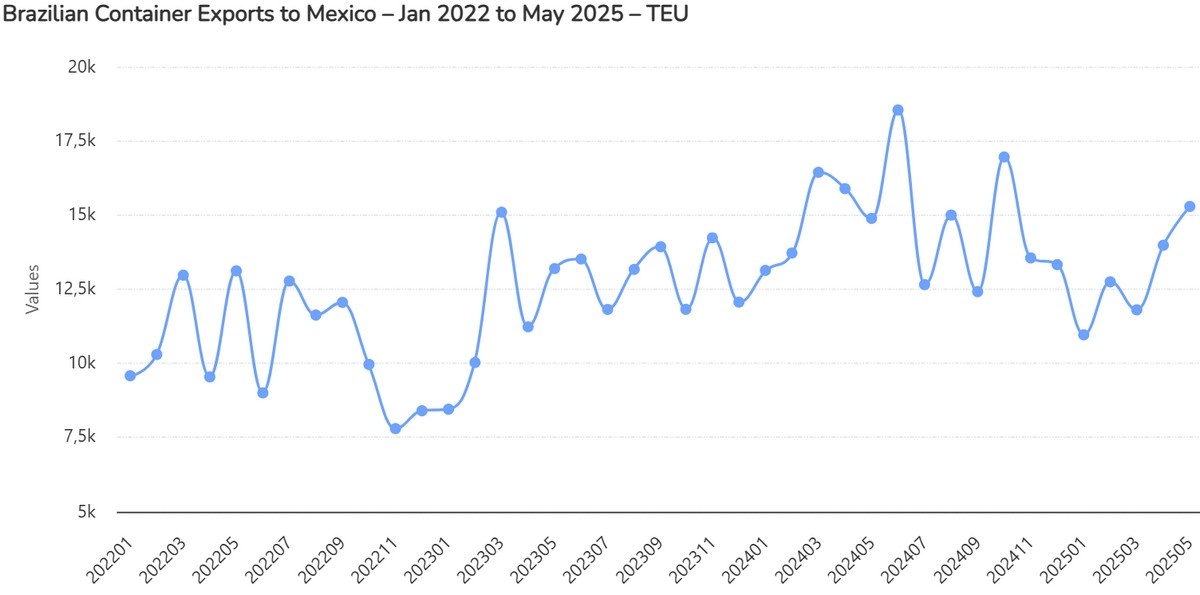
In 2024, Brazilian exports to Mexico accounted for USD 7.8 billion, with a USD 2 billion trade surplus, a decrease from the previous year's USD 3 billion surplus. Analysts view Trump's tariffs and the political alignment between Brazilian President Lula da Silva and Mexico's President Claudia Sheinbaum as further incentives to finalize trade agreements. However, Sandra Rios, director of Cindes, cautions that these efforts are long-term and indicate a pursuit of alternatives.
Rios also notes the necessity for Brazil to be receptive to Mexican imports. Past negotiations have faced roadblocks, rooted in fears of domestic industry disruption and indirect U.S. imports. According to Rios, trust issues and Mexico's agricultural protectionism also impede progress, as Brazil seeks agribusiness inclusivity in agreements.
Frederico Lamego from Brazil's CNI states that trade asymmetries with Mexico can be managed through structured negotiations, leveraging tools like tariff phaseouts and exclusions for sensitive products. He highlights underutilized opportunities, with current barriers limiting bilateral trade growth.
Jorge Amâncio Oliveira from the University of São Paulo's Institute of International Relations acknowledges that alternative market agreements won't deliver swift results due to differences in exported goods to Mexico and the U.S.
Barral mentions both countries' large consumer markets as advantageous, should Mexico explore diversifying trade partnerships with Brazil as a potential candidate.
Source: DatamarNews