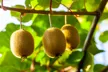

The first New Zealand kiwi fruits of the new season left New Zealand for China on the 22nd of March, 2022. They arrived in Damaiyu Harbor in Taizhou, which signaled an important step in the Regional Comprehensive Economic Partnership (RCEP) and marked a milestone in cross-border fruit import and export between China and New Zealand. Taizhou is only the second Chinese port after Shanghai to receive New Zealand kiwi fruit directly. This new chapter in the economic relation between Taizhou and New Zealand was celebrated with an official opening ceremony.
China is the largest trade partner of New Zealand, and the most important overseas market for New Zealand kiwi fruit, apples, cherries, and avocados. Data from the General Administration of Customs China (GACC) shows that trade between China and New Zealand was worth 160 billion yuan [25.19 billion USD]. That was an increase of 27.2% compared to 2020. The import value of fruit products counted for 41.5 billion yuan [6.54 billion USD]. That is not an easy accomplishment during the pandemic. Moreover, the Zespri brand alone accounted for 3.5 billion yuan [550 million USD]. Zespri Group is the main brand in the New Zealand kiwi fruit industry. They occupy 80% of the Chinese kiwi fruit import market.
According to Hong Di, vice-chairman of SinoTransPFS Co., Ltd., Zespri rapidly expanded since they entered the Chinese market 20 years ago. Zespri is now looking for strategic partners in additional ports outside of Shanghai to further expand the kiwi fruit market in China. Damaiyu Port appointed an assigned supervised pier for cross-border fruit trade on the 31st of December last year.
The new kiwi fruit season in the Chinese market officially began on the 24th of March. Damaiyu Port officially welcomed the first shipment of New Zealand kiwi fruit, which weighed 6,000 tons. The first shipment was a major milestone for Damaiyu Port, and the port authorities continue to improve the logistical environment to optimize operations, and strengthen the economic position of Taizhou.
Source: Fruit Critic