
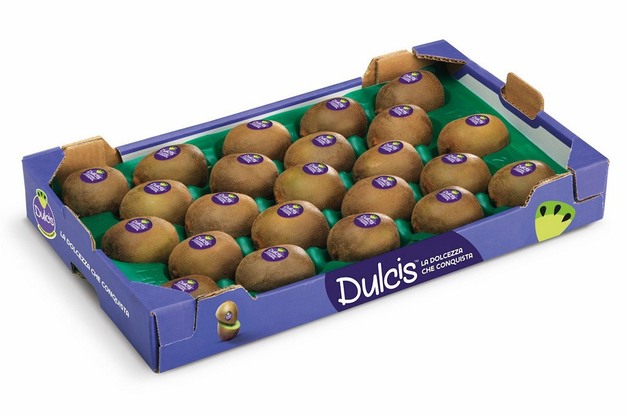
The quality of the kiwi was evaluated based on its size and objective parameters related to taste, aroma, and shelf life. We are talking about the green-fleshed Dulcis kiwi, which has completely different characteristics from those previously known. The Dulcis Quality Index (IQD) was introduced to provide concrete quality measurements.
"This allows farmers to be rewarded for the quality of their fruit and ensures consumers have access to excellent kiwis," says Mirco Montefiori, director of New Plant and president of Dulcis Kiwi Company. Our goal was twofold: to recognize farmers for both the size of their crops and the dry matter content. Essentially, the greater the kiwi's potential, the higher the farmer's earnings beyond the standard payout."
Several years ago, the process began with the selection of a new variety of citrus fruit with exceptional organoleptic qualities that would distinguish it worldwide. The next step was to establish minimum quality parameters at harvest for inclusion in the Dulcis system and marketing.
This variety is known for its resilience, adaptability to changing climates, and resistance to PSA. These features have generated significant interest in the kiwi sector.
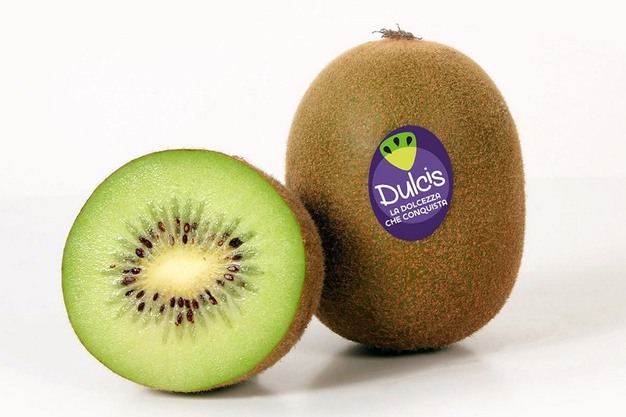
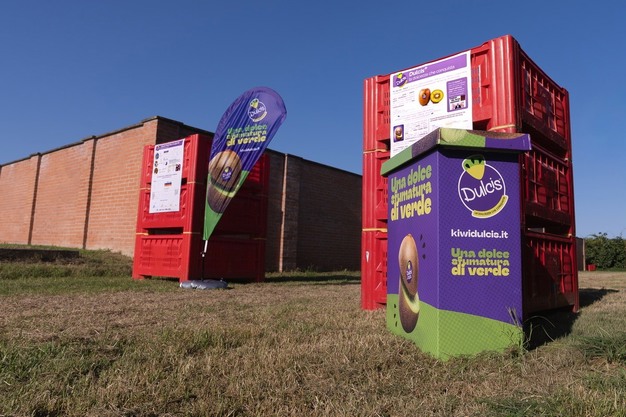
Currently, more than 350 hectares are under cultivation, and projections suggest this figure will nearly double by the end of 2026. Production is expected to reach 1,900 tons this year, with the first harvested batches set to be marketed in early November. "Harvesting is well underway," Montefiori continues. "Our technicians authorize the picking of Dulcis kiwi orchards one by one based on in-field analyses. They regularly check to measure the dry matter content, and harvesting can only begin once a minimum level of 17% dry matter is reached. Of course, the average dry matter values are well above 17%. Otherwise, that batch could not be harvested, or, in extreme cases, it would be excluded from the branded production chain."
 Mirco Montefiori (New Plant)
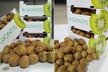
Dulcis fruits have the typical taste and aroma of yellow kiwis, but with green flesh. The acidity that defines green kiwis is balanced by a high Brix degree and dry matter content, creating a blend that satisfies operators' and consumers' preferences. "Dulcis is Dulcis. It cannot be classified as green or yellow. It is a true novelty, which is why the market rewards it," the manager explains.
After many years, Dulcis is a real innovation in the kiwi market. It is a 100% Italian variety developed by New Plant in collaboration with the universities of Udine and Bologna. The Alegra, Apofruit Italia, and Orogel Fresco cooperatives produce and market it.
The main cultivation areas are Emilia-Romagna, Lazio, Calabria, and Veneto. "Before harvesting, several samples are taken to check the quality and wholesomeness of the product. A Dulcis kiwi must pass many tests to be considered as such," concludes Montefiori.
For more information:
Dulcis Kiwi Company srl
Via Malpighi, 5
47122 Forlì - Italy
www.kiwidulcis.it