
A village claims its slice of history:
The birthplace of the Packham Pear
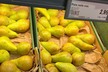
The Australian Dictionary of Biography credits Charles Henry Packham with crossing the Uvedale St Germain (Bell) with a Williams to create the Packham Triumph Pear.
It was sent to the Department of Agriculture where one of its experts W.J. Allen is reported to have described it as the finest he had tasted.
President of the Molong Historical Society Marie Hammond says Mr Packham developed the fruit because he wanted a late ripening variety.
"I mean we've had wonderful wheat crops and champions at the shows but they've faded into history but our Packham Triumph pear is still very much to the fore and in shops throughout Australia."
The Historical Society and people of Molong are trying to promote its slice of food history and several events are planned to celebrate the Packham pear.
As well it's been suggested the smooth lines and shape of the fruit could be used as a town symbol or logo and perhaps used to draw tourists to Molong, particularly those who already visit the nearby foodie mecca of Orange.
"It is really a signature of Molong and so it's very interesting to have something that has developed here over so many years ago that's still so marketable today," Ms Hammond said.
"We don't want to be like the big banana but the pear is really Molong's icon."
She says after Charles Henry perfected his variety, the Packham Triumph became very popular and was grown locally along with a range of other fruit in the Molong district including apples, peaches, plums, apricots and grapes.
Ms Hammond says the variety was also taken up overseas and 20,000 Packham cuttings were sent to America and at the time of Charles Henry Packham's death there were 20,000 saplings of his variety growing locally.
Molong no longer has an orcharding industry but many local families have a Packham pear tree or two although it's not clear whether any of these are direct descendents of Charles Packham's original stock.
Just down the road from the Molong museum, Charles Henry's great-great grand nephew, John Packham inspects the crop on his own Packham pear tree which he bought commercially about eight years ago.
It's been a good year for the fruit and he and his wife have enjoyed eating them straight from the tree and in dishes such as caramelised pears as well as giving some away.
John Packham says it's a shame Molong has lost its orcharding industry and many people, even locals, don't know the story of the Packham Triumph.
"People we've come across [say] oh we've got one of them and they've never ever known," Mr Packham said.
He is encouraging his children to take an interest in learning and disseminating the Packham pear history and will also be donating two trees to Molong's community garden and yarn market to help raise awareness about them.
"I suppose if it's got reference to it here there and everywhere people will start to take notice.
Champion Country Women's Association Cook Merle Parrish who happens to be a distant descendent of the Packhams will cook using the pears at a fundraiser for the Molong Museum on 27 April.
The Packham Pear will be a highlight of the Molong Historical Society's heritage weekend on 9-10 May.
Source: www.abc.net.au/