
Sign up for our daily Newsletter and stay up to date with all the latest news!

Subscribe I am already a subscriber

You are using software which is blocking our advertisements (adblocker).

As we provide the news for free, we are relying on revenues from our banners. So please disable your adblocker and reload the page to continue using this site.
Thanks!

Click here for a guide on disabling your adblocker.

Sign up for our daily Newsletter and stay up to date with all the latest news!

Subscribe I am already a subscriber

Nigeria: Fluted pumpkin farming potentially lucrative

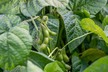
Discussing the economies of pumpkin farming with regard to the fluted pumpkin (or Telfairia Occidentalis) is not without merit. Firstly, it is one of the most common edible vegetables in Nigeria. Furthermore, fluted pumpkin farming has the potential to yield fast cash and in a great measure. It is one of the most lucrative of the vegetables because of the universal appeal, nutritional value and medicinal properties.

The leaves are used in preparing all kinds of soups and a variety of delicacies. The seeds can be processed into oil, used for cooking or soap making. The leaves are often referred to as 'blood tonic', because of their alleged potential to return strength to anaemic persons. It contains essential vitamins and minerals.

Fluted pumpkins are mostly grown in the southern and middle parts of the Nigeria. But it can be grown in any part of the country, even the north, as it copes very well with droughts. The seeds are very cheap and can be sourced easily.

According to an article on independent.ng fluted pumpkin farming is not capital intensive. It is a business you can start with little capital. For one starting on a small scale, all that is needed is a piece of land. Some hard work and capital may be required in order to have sufficient irrigation.

Publication date:

Related Articles → See More