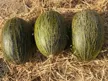

Watermelons have been domesticated for about 4,000 years. An international team of researchers has re-sequenced the genome of watermelons, revealing the evolutionary history of the fruit and identifying key genes for quality traits. In 2013, researchers from China and the United States released the first watermelon reference genome using a cultivated variety.
In the new study, researchers from the Beijing academy of Agricultural and Forestry Sciences, Cornell University in the United States and other research institutions from the two countries reported in the journal of Nature Genetics that they first improved the reference genome with new approaches, revealing previously unknown parts of the genome.
They then sequenced the genomes of 414 different watermelons representing all seven species. By comparing the genomes to the new reference genome and to each other, they determined the evolutionary relationship of the different watermelon species.
Meanwhile, the researchers also identified key genes for the quality traits of watermelons. For instance, they identified the gene ClAGA2 with a significant role in fruit flesh sugar accumulation and a mutation in the gene LCYB giving most modern cultivated watermelons a red flesh color.
Another major discovery from the study is that one wild species has been widely used in watermelon breeding, making domesticated varieties more resistant to pests and diseases.
In another study published in the same issue of Nature Genetics, an international team, including researchers from China, Spain, France and Israel, re-sequenced 134 wild melon varieties and 1,041 domesticated ones, identifying two genes that are associated with the loss of bitterness in melons, a key trait in melon domestication.
According to urdupoint.com¸ researchers from Germany said in a review article that the two genetic studies uncover how domestication changed fruit quality traits in melons and watermelons and provide breeders with comprehensive variation maps.