

Researchers with the Cooperative Extension Service are investigating an emerging disease that has increasingly affected strawberries across Arkansas in recent months.
Aaron Cato, extension horticulture integrated pest management specialist for the University of Arkansas System Division of Agriculture, said the disease was first detected in the state in 2020 but remained relatively quiet until this year. "It's not completely new to Arkansas," Cato said. "We first saw this Neopestalotiopsis several years ago — it killed a bunch of plants at one farm and in some of our trials. It's not new to specialty crops per se, but this aggressive disease is new to the strawberry landscape in the United States."
Neopestalotiopsis is a genus of plant pathogens in the family Sporocadaceae. While it poses no health risk to humans, it is pathogenic to strawberries. The fungus was first seen in large numbers by growers in Florida in 2018. By 2020, it had become a major issue in nurseries producing strawberry starter plants, with its emergence seemingly linked to excessive rainfall.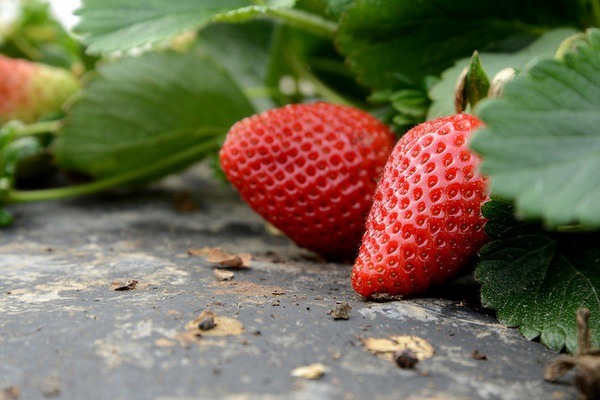 © University of Arkansas
Cato noted that although researchers have been monitoring it for several years, there's still limited understanding of the different strains or species involved. "This happens sometimes when we get new crop pests," he said. "This fungus may have been present before, but it wasn't aggressive or widespread enough to be a concern. Now, it's behaving differently, and we suspect there are at least two aggressive strains or even multiple species."
Depending on the strain, strawberries may experience crown rot, which causes plants to collapse and die, often in the early fruiting stage, or fruit and leaf rot, which is more visibly identifiable. The crown is the central part of the plant where leaves and roots originate.
"There's still a lot we need to determine before we can give growers clear answers," Cato said. "We're just not there yet, and growers are doing their best with integrated strategies to minimize losses in what's shaping up to be a high-risk year."
Cato added that several fungicides commonly used in Arkansas are proving ineffective against the fungus. Many growers are turning to cultural practices instead, such as removing diseased plants and reducing contact between them. "I think growers have tightened up their operations and are also using fungicides that have shown effectiveness in Florida and Georgia," he said. "I've visited farms where growers are managing the disease well and producing strong crops."
With warmer temperatures and potentially more rainfall expected in May, researchers anticipate increased fungal activity.
For more information:
Ryan McGeeney
University of Arkansas
Tel: +1 501 671 2120
Email: [email protected]
www.uaex.uada.edu